
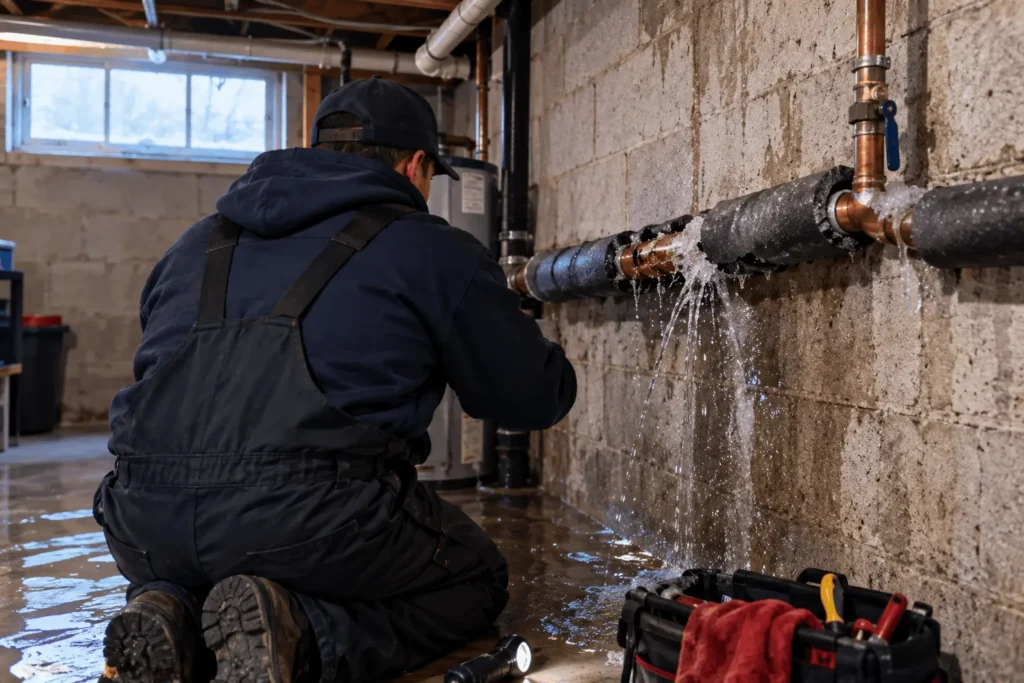
Fall is the right time to think about frozen pipes. Massachusetts homeowners deal with this every winter, and freezing is a known cause of costly homeowners’ insurance claims in the state. Once the first hard freeze reaches Saugus, the pipes in your attic, crawl space, garage, and exterior walls are the first to suffer. Water expands as it turns to ice. That pressure can crack a pipe, and the leak often starts only after the ice melts. The result can be a soaked ceiling, damaged floors, and a long insurance claim. Prevention costs far less than repairing water damage.
At Aquaflow Plumbing & Heating, we know how fast a cold snap can turn into a plumbing problem. Most of those problems are avoidable. This guide explains why pipes freeze, how to protect them before winter, how to thaw one safely, and what to do in the first minutes after a pipe bursts. It also covers when a DIY fix stops being safe and it is time to book plumbing repair in Saugus.
Why Do Pipes Freeze and Burst?
Pipes freeze when cold air reaches them and the water inside turns to ice. The ice expands, and pressure builds inside the pipe. That pressure can crack it.
The highest-risk pipes sit in unheated or poorly sealed areas. These include pipes in exterior walls, attics, crawl spaces, garages, and unheated basements. A warm room does not guarantee safety. A direct draft of cold air on a pipe can freeze it even when the room feels comfortable.
How to Prevent Frozen Pipes Before Winter
Most freeze-ups come down to cold air, missing insulation, and still water. These steps address all three.
Insulate pipes in unheated areas. Foam sleeves work well on pipes in the basement, attic, crawl space, garage, and under sinks. Insulate both hot and cold lines. If you use heat tape or heat cable, follow the manufacturer’s instructions exactly.
Seal air leaks near pipes. Look for gaps where pipes enter exterior walls, and close them with caulk or spray foam. Repair broken basement windows. Keep garage doors closed if water lines run through the garage.
Disconnect hoses and shut off outdoor faucets. Remove garden hoses, shut off the supply to exterior spigots from inside the house, and drain the outdoor faucet.
Keep the heat on and steady. Set the thermostat to the same temperature day and night during cold weather. If you leave town, keep it at 55 degrees Fahrenheit or higher. Also book regular boiler maintenance in the fall. A heating system that quits during a cold snap puts every pipe in the house at risk.
Open cabinet doors. On cold nights, open the cabinets under kitchen and bathroom sinks so warm air can reach the pipes. Move cleaning products out of reach of children first.
Let faucets drip during extreme cold. For pipes in exterior walls, a slow drip keeps water moving. Moving water is harder to freeze, and the drip relieves pressure inside the pipe.
Find your main water shutoff valve now. It is usually near the water meter or where the main line enters the home. Turn it off and on a couple of times a year to make sure it works. In a burst, this valve is the first thing you need.
How Can You Tell a Pipe Is Frozen?
A faucet that gives only a trickle, or no water at all, is the clearest sign. The frozen section is often in a pipe along an exterior wall or in an unheated space. Check your other faucets too. If one pipe is frozen, others may be at risk.
How to Thaw a Frozen Pipe Safely
Thaw a pipe slowly, and only if you see no leak or bulge. Follow these steps in order.
- Open the faucet on the frozen line. Water will flow as the ice melts, and that flow helps melt more ice.
- Find the frozen section. Feel along the pipe to locate the coldest spot.
- Apply gentle heat. Wrap a heating pad around the pipe, use a hair dryer, or drape towels soaked in hot water over it. Keep electrical devices away from standing water.
- Keep heating until pressure returns. Then check every other faucet in the house.
- Turn the water back on slowly. Watch the pipe for leaks as pressure builds.
Never use a blowtorch, propane heater, kerosene heater, or any open flame. Open flames can start a fire, and they can boil the water inside the pipe. Massachusetts fire officials have warned against it.
Call a plumber if you cannot find the frozen spot, cannot reach it, see a bulge, or still have low pressure after thawing.
What to Do If a Pipe Bursts
Act in this order.
- Shut off the main water valve. This stops the flow and limits the damage.
- Turn off electricity to the affected area. Do this if water is near outlets or appliances. Only reach the breaker if you can do it without stepping in water. If you cannot, stay out and call for help.
- Move belongings out of the way. Shift furniture, rugs, and electronics away from the water. Take photos before you clean up.
- Call a plumber. A plumber can repair the pipe and check for more damage.
- Call your insurer. Then start drying the space with fans and a dehumidifier.
Insurance details matter here. The Massachusetts Division of Insurance reported that 48.6% of homeowners’ insurance claims in the state in 2024 were for non-flood water losses and freezing-related damage. It also notes that most policies cover sudden and accidental burst-pipe damage only if the home was properly heated and not left unoccupied. Confirm your own coverage with your insurer or agent.
Quick Facts: Frozen Pipes in Massachusetts
- Why pipes burst: Water expands as it freezes, and pressure builds inside the pipe
- Highest-risk areas: Exterior walls, attics, crawl spaces, garages, and unheated basements
- Heat setting when you are away: 55 degrees Fahrenheit or higher
- First step in a burst: Shut off the main water valve
- Never use to thaw a pipe: Blowtorches, propane heaters, kerosene heaters, or open flames
- Massachusetts claims data: 48.6% of homeowners’ claims in 2024 involved non-flood water losses or freezing-related damage
When to Call a Plumber in Saugus, MA
A hair dryer can fix a simple freeze. Other situations need a professional right away. Call a plumber if:
- You cannot find or reach the frozen section
- A pipe is bulging, cracked, or leaking
- Water pressure stays low after thawing
- The same pipe freezes every winter
- Any pipe has burst
Our team provides plumbing services for homeowners in Saugus and across the North Shore. We also provide heating services, because a failing boiler or furnace puts your pipes at risk too. If you search for a plumber near me during a cold snap, our reviews and service history are easy to verify on Google.
Protect Your Pipes Before the First Freeze
Frozen pipes are easier to prevent than to repair. Insulate exposed lines, seal drafts, keep the heat on, and know where your main shutoff valve is. If a pipe freezes or bursts, act fast and call a plumber. Aquaflow Plumbing & Heating is ready to help Saugus homeowners, so contact our team today to get your plumbing ready for winter.
FAQs
Is it safe to thaw a frozen pipe myself?
It can be, if you thaw it slowly and see no leak or bulge. Open the faucet, then use a heating pad, a hair dryer, or towels soaked in hot water. Never use an open flame, and call a plumber if you cannot find or reach the frozen section.
Should I leave my faucets dripping when it freezes?
Yes, during extreme cold, especially for pipes in exterior walls. A slow drip keeps water moving through the pipe and helps relieve pressure. The cost of the extra water is small compared with the cost of a burst pipe.
What should I do first if a pipe bursts?
Shut off the main water valve right away. Then turn off electricity to the affected area only if you can do so without standing in water. Call a plumber and your insurer after that.
Does homeowners insurance cover a burst pipe in Massachusetts?
Often, but not always. The Massachusetts Division of Insurance says most policies cover sudden and accidental burst-pipe damage only if the home was properly heated and not left unoccupied. Check your policy or ask your agent to confirm your coverage.